Thursday, March 25, 2010

Who is Asia-Pacific's Sexiest Vegetarian?

Adz says it's Charli Delaney, Ginni says it's Pippa Black from Neighbours. Who do you think is the sexiest Vegetarian in Asia-Pacific?

The nominees haven't been posted long, but TV personality Ruby Rose has taken the lead over other Australian contenders in PETA's Asia-Pacific's annual Sexiest Vegetarian Celebrity poll Running close behind in the race for the Australian title are child star-turned-TV personality Charli Delaney; model and former Neighbours star Imogen Bailey; Kisschasy singer Darren Cordeux; Home and Away star-turned-Hollywood hottie Isabel Lucas; singer-songwriter Missy Higgins; Australian Idol host Andrew G; surfing sensation Dave Rastovich; and folk singer Xavier Rudd.

Other celebrities from around the world who've gone vegetarian to protect animals, the environment and their own health include actors Hayden Panettiere, Natalie Portman and Milo Ventimiglia; singers Anthony Kiedis and Leona Lewis; UFC champion Mac Danzig; and sports stars John Salley and Greg Chappell.

"When you look at the more than 200 gorgeous celebrities in this year's poll, it's clear that there can be no bones about it - a vegetarian diet makes you beautiful, inside and out", says PETA Asia-Pacific Director Jason Baker. "After all, going vegetarian is the best thing that you can do for animals, the Earth and yourself. Plus, everyone knows that there's nothing sexier than someone who exudes both passion and compassion."

(above taken from a PETA Press Release).

Click here to listen to the HDC chat with PETA's Ashley Fruno about the poll.

Have your saying by voting at http://www.petaasiapacific.com/featureSexiestVegCeleb2010-Eng.asp?c=papsv10epr.

Is being Vegetarian too sexy?


The HDC Crew talk with Ashley Fruno of PETA about advantages of becoming a vegetarian, the organisations ways of getting the message across and the Americans who think they are too raunchy.

Click here to listen to the interview.

Here's the video that's too raunchy for some Americans:

A Solution for the Palm Oil Problem

In past week's on All Natural we have looked at the issue of Palm Oil. Australia sources a lot of it's Palm Oil from Indonesia, where forest are destroyed for Palm Oil plantations. This leads to the destruction of the habitats to Orang-utans, Tigers and many other beautiful creatures. Palm Oil is used in many food and beauty products found in Australia. At this point in time clear labelling is not required. This makes it near impossible for Australian's to make educated choices when shopping.

Jonathan Larkin of WWF talks about the development of sustainable Palm Oil and a bill introduced into the Senate to ensure correct labelling in Australia. Click here to listen.

For more information, please visit http://www.wwf.org.au/

Wednesday, March 24, 2010

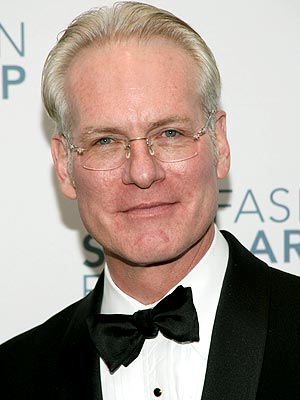
PETA's Man & Woman of 2009 - Ellen Degeneres & Tim Gunn

Each year PETA chooses two individuals who take action towards the well being of animals. For 2009 the winners are...

Ellen Degeneres


Ever since she and her wife, Portia De Rossi, decided to ditch all animal products in 2008, Ellen has made sure that her wildly popular talk show includes features to raise people's awareness of animal issues. She made vegan pizza with Chef Wolfgang Puck, spoke with Dr. Neal Barnard about the health benefits of a vegan diet, and just in time for Thanksgiving, "talked turkey" about the everyday abuse of animals on factory farms with Jonathan Safran Foer, author of Eating Animals. Ellen also created pages on her Web site that feature insight, info, and tips about cruelty-free living. Visitors can find recipes, read about why Ellen went vegan, learn where to shop, and more.

...and the winning male is Tim Gunn.


The connoisseur of class, the guru of good taste, the titan of tact (I could go on all afternoon with these) narrated our video exposing skin-crawling atrocities suffered by animals who are slaughtered for their pelts, and the media have been buzzing ever since. Tim recently told the L.A. Times, "Wearing fur is like wearing a big sign reading, 'I'm in favor of inflicting cruelty and pain on animals as a fashion statement.' Unspeakable torture is inflicted on dogs, cats, bunnies, raccoons, foxes, minks, and myriad trapped, helpless creatures in the name of fashion—yes, dogs and cats."

And thanks to Tim, fur challenges are noticeably absent from Project Runway—and there's zero fur at Liz Claiborne, where he is chief creative officer.

Click here to listen to the HDC chat with PETA's Ashley Fruno about Ellen & Timm.

To find out the latest from PETA, please visit www.peta.org

Tuesday, January 26, 2010

The Campaign against an Uranium Mine in the Northern Territory

In Alice Springs a local Aboriginal band has hooked up with popular N.T. band Super Raelene Bros. to record a song in local Arrente and Luritja languages about the impact of proposed Uranium mine at Angela Pamela and the possible impact on the locals' health.

Basil Schild of Super Raelene Bros. talks about the impact on the local people and the campaign against the mine.

Click here to listen to the interview.

For more information, please visit http://www.alec.org.au

Monday, January 25, 2010

A Pet is not just for Christmas

The average life expectancy for a dog is around 13 years and 15 years for a cat...some will live longer than 20 years. So when buying a pet as a gift whether for a child or an adult it's vital to consider who will care for the pet in the future...once the novety has warn off.

Ashley Fruno of PETA discusses the implications of owning a pet. It's not just for Christams. It can be up to 20 years....Many romantic relationships don't last that long!

Click here to listen to the interview.

Check out PETA's website at http://www.peta.org/

Tuesday, December 15, 2009

Tasmania Devils at Healesville Sanctuary


Devil facial tumour disease (DFTD) is an aggressive non-viral transmissable parasitic cancer that affects Tasmanian Devils. The first "official case" was described in 1996, in Australia. In the subsequent decade the disease ravaged Tasmania's wild devils, with estimates of decline ranging from 20% to as much as a 50% of the devil population, across over 65% of the state. Affected high-density populations suffer up to 100% mortality in 12–18 months. The disease has mainly been concentrated in Tasmania's eastern half. Visible signs of DFTD begin with lesions and lumps around the mouth. These develop into cancerous tumours that may spread from the face to the entire body. The tumours interfere with feeding, and the affected animal may starve to death.

At Healesville Sanctuary they have a successful breeding programme. The main purpose of the program is to establish an insurance population that can be realised if wild Tasmanian Devil become extinct due to the spread of DFTD

The Hump Day Crew chatted to Tammika McIvor about the Tasmanian Devils and the Healesville Breeding Program success. Click here to listen.

For more information on all the happenings at the three Victorian Zoos, please visit http://www.zoo.org.au/

Tuesday, December 8, 2009

The HDC keep you updated on Copenhagen

Delegates from around the world as well as scientists, NGO representatives and interested spectators have descended upon Copenhagen as the world attempts to plan how to tackle climate change. The Hump Day Crew keep you updated with our weekly interviews.

Click here to listen to David Hood of Greenpeace discuss the conclusions of the Copenhagen summit.

Click here to listen to what's happening in the first few days of the talks with Jonathan Larkin from the WWF.

Click here to listen to Luke Chamberlain discuss the other aspect of the Copenhagen talks getting less media attention then emissions reductions ie. saving world forests.

Click here to listen to Jonathan Larkin discuss the lead up to the Copenhagen talks.

For further information, please visit http://www.wwf.org/, www.greenpeace.org and http://www.wilderness.org.au/

Wednesday, November 18, 2009

Melbourne Zoo's New Wild Seas Exhibit

On the 9th December Melbourne Zoo will open their new Wild Seas exhibit to the public. The seals and penguins are currently moving in and will be followed at a late time, by pelicans, rays, Port Jackson Sharks and a variety of fish species.

The Hump Day Crew were intrigued to find out about the exhibit.

Click here to listen to the interview with Melbourne Zoo's curator for the exhibit, Jan Steele.

For the latest news from Zoos Victoria, please visit http://www.zoo.org.au/

The Environmental Impact Of The Oil Spill of the WA Coast

Recently the news coverage has looked at the financial and human impact on the oil spill of the coast of WA. How about talking with our Conservation Director, Dr Gilly Llewellyn, Conservation Director of the WWF was one of very few people to personally go out there and see what was going on. The Hump Day Crew chat to her about the issue.

Click here to listen to the interview.

For the latest news from the WWF, please visit http://www.wwf.org.au/

Wednesday, November 4, 2009

The True Food Guide 2010

Australia currently has limited labelling laws for genetically engineered (GE) foods. That's where the Truefood Guide comes in handy. The Guide rates food brands and products as Green (GE-free) and Red (may contain GE ingredients).

You can browse or search for brands on the right-hand side. The Guide is also available for download or you can order a convenient wallet-sized hard copy. It's simple to use:

Buy Green. Companies and supermarkets listed as green have implemented policies and procedures throughout their supply chain to actively avoid ingredients derived from GE crops.

Avoid Red. The companies and supermarkets listed in the red section of the guide may have products that contain ingredients derived form GE crops.

Click here to listen to Laura Kelly from Greenpeace discuss the excitement of the new release.

You can download the guide from http://www.truefood.org.au/

Also take time to quickly sign the on-line petition at http://www.truefood.org.au/OurRightToKnow/

Stay posted with all Greenpeace initiatives at http://www.greenpeace.org.au/

Tuesday, November 3, 2009

PETA's Top 5 on Living Cruelty Free

People for the Ethical Treatment of Animals (PETA), with more than 2.0 million members and supporters, is the largest animal rights organization in the world.

PETA focuses its attention on the four areas in which the largest numbers of animals suffer the most intensely for the longest periods of time: on factory farms, in laboratories, in the clothing trade, and in the entertainment industry.

Ashley Fruno of PETA Asia Pacific talks to the Hump Day Crew on five ways to live in a way that is cruelty free to animals. Her top five are:

1. Going vegan.
2. Buying only cruelty free products.
3. Not supporting zoos and other forms of entertainment using animals.
4. Not wearing wool, fur or leather.
5. Adopting an animal from a shelter and spaying or neutering companion animals.

Click here to listen the Ashley Fruno talking with the Hump Day Crew.
For the latest information, please visit http://www.petaasiapacific.com/

Saving Frogs with Michelle Howard - Zoos Victoria

Frogs play a vital roll in any environments ecosystem. They are also extremely vulnerable to environmental change since they require a stable environment in both the water and the land. Zoos Victoria has several initiatives aiming to conserve the welfare of frogs in our state.

At both Werribee and Healesville they are holding frog spotting nights where you have the chance to grab a torch and learn to identify frogs from their calls. You can also do your bit at home by recording any frog sounds you hear and sending them to the zoo. By collecting these recordings, Zoos Victoria can identify exactly which species of frogs are inhabiting where.

Click here to listen to Michelle Howard discuss these campaigns as well as saving the Southern Corroboree Frog (pictured) which is facing extinction as a result of disease caused by infection with a pathogen known as the Amphibian Chytrid Fungus as well as habitat destruction.

Find out more at http://www.zoo.org.au/

Tuesday, October 6, 2009

350.org prepares for an International Day of Action on 24th Oct, '09

Accelerating arctic warming and other early climate impacts have led scientists to conclude that we are already above the safe zone at our current 390ppm, and that unless we are able to rapidly return to 350 ppm this century, we risk reaching tipping points and irreversible impacts such as the melting of the Greenland ice sheet and major methane releases from increased permafrost melt.

There are three numbers you need to really understand global warming, 275, 390, and 350.

For all of human history until about 200 years ago, our atmosphere contained 275 parts per million of carbon dioxide. Parts per million is simply a way of measuring the concentration of different gases, and means the ratio of the number of carbon dioxide molecules per million other molecules in the atmosphere. 275 ppm CO2 is a useful amount—without some CO2 and other greenhouse gases that trap heat in our atmosphere, our planet would be too cold for humans to inhabit.

The 24th October, 2009 has been chosen as an international day of action for Climate Change in which 141 countries will participate in various activities to increase the attention deserved by Climate Change.

Luke Chamberlain, Forests Campaigner for The Wilderness Society speaks about 350.org and gives an update on logging in Victoria's Brown Mountain area. Click here to listen.

For more information, please visit http://www.350.org/ and http://www.wilderness.org.au/

Tuesday, September 29, 2009

BANNED: Pamela Anderson's New PETA Anti-Fur Advert

Animal Rights Organisation PETA is no stranger to controversial campaigns, but now they've managed to have one their racy videos banned at an entirely new location: airports. PETA's video features Pamela Anderson playing the role of an airport security guard who forces passengers to remove any clothes that aren't animal friendly. According to the New York Post, the video was scheduled to be played in several New York area airports, but after viewing it officials have decided the video is too provocative for children and are refusing to air it.

You be the judge:


For more information on PETA, please visit http://www.peta.org/

If you become a vegetarian you can drive a car

A common reason for individuals to choose vegetarianism is because of the poor standard at which animals are raised for meat. However the environmental impact of eating meat is also something worth considering. Producing just one pound of meat produces the same amount of greenhouse gases as driving a SUV 40 miles.

A 2006 United Nations report summarized the devastation caused by the meat industry by calling it "one of the top two or three most significant contributors to the most serious environmental problems, at every scale from local to global." The report recommended that animal agriculture "be a major policy focus when dealing with problems of land degradation, climate change and air pollution, water shortage and water pollution, and loss of biodiversity."

According to Environmental Defense, if every American skipped one meal of chicken per week and substituted vegetarian foods instead, the carbon dioxide savings would be the same as taking more than a half-million cars off U.S. roads.

People for the Ethical Treatment of Animals (PETA), with more than 2.0 million members and supporters, is the largest animal rights organization in the world.PETA focuses its attention on the four areas in which the largest numbers of animals suffer the most intensely for the longest periods of time: on factory farms, in laboratories, in the clothing trade, and in the entertainment industry.

They are a stand out organisation who make their statement by utilising pop culture.

Check out one of their adverts that was banned in the USA:


May celebrities such as Alicia Silverstone, Bryan Adams, Sophie Monk and Sir Paul McCartney have thrown their support behind PETA.

To hear all about it, click here and listen to the interview with one of PETA's Senior Campaigners, Ashley Fruno.

To find out more, please visit http://www.peta.org/ and http://www.goveg.com/

Tuesday, September 22, 2009

The Mountain Pygmy Possum - only 30 left in the wild

The Mountain Pygmy-possum is the largest of Australia's five species of pygmy-possum, yet it only weighs 45 grams and could easily fit in the palm of your hand. Its mouse-like body is covered in thick greyish fur, it has a long tail, agile front feet designed for gathering food, and strong back feet for gripping. It also has enlarged front teeth for cracking seeds. Unfortunately, there is as little as 30 left in the wild.

Click here to hear what Zoos Victoria is doing to save the Mountain Pygmy-possum from extinction.

For the latest news on Zoos Victoria, please visit http://www.zoo.org.au/

Monday, September 21, 2009

The Wilderness Society Update - Environment East Gippsland sues VicForests for illegal logging

Today, Environment East Gippsland commenced proceedings against VicForests in the Supreme Court of Victoria.

A writ was filed with the court this morning and has just been served on VicForests.

“We ask the Court for a permanent injunction to stop VicForests from logging Brown Mountain” said Jill Redwood, Coordinator of EEG. “We also ask the Court to declare that the logging of Brown Mountain is unlawful”.

Brown Mountain is known habitat for at least five species of wildlife listed as vulnerable or threatened under the Flora and Fauna Guarantee Act.

Click here to hear the latest from The Wilderness Society's Amelia Young.

To find out the latest news from The Wilderness Society, please visit http://www.wilderness.org.au/

Thursday, September 17, 2009

Watch Out! It's The Snubin Dolphin.

In 2005 a new species of dolphin was found in Australian waters, the Australian snubfin dolphin. The discovery of a new mammal is extremely rare. Until recently the snubfin dolphin was thought to be an Irrawaddy dolphin, which is found in coastal areas and major rivers of south-east Asia, and is in serious decline.

The snubfin dolphin is Australia’s only endemic dolphin, meaning it is unique to northern Australia. Coastal and river dolphins are among the most threatened species of mammal in the world.

Interestingly, the snubfin has a unique way of attacking prey...by spitting water at it.

To find out more click here to listen to the interview with WWF's Lydia Gibson, their Tropical Marine Species Manager.

Please visit https://secure.wwf.org.au/act/donate/snubfin/ to find out how ways to support WWF and the Snubfin dolphin.

Sunday, August 30, 2009

Who Gives You Your Wood?

Australians use wood for hundreds of different things. But where does this wood come from? Is your beautiful dining room table the stolen home of an Orang-utan? Is your wood decking responsible for climate change? .

Australia imports products made from timber that is illegally harvested from the Paradise Forests of Papua New Guinea, Indonesia and Solomon Islands. This rampant and unregulated illegal logging is linked to corruption, environmental destruction and loss of livelihood for forest communities.

We now have the ability to make informed decisions when buying wood and knowing where it comes from...in other words, you can choose Good Wood.

Good Wood comes from ethically and ecologically sustainable sources. Buying Good Wood tells companies there is no market for illegal and destructive timber and forces them to act responsibly.

Click here to listen to the interview with Reece Turner - Forests and Whaling Campaigner for Greenpeace Australia.

Take the time to check out the following websites too!

http://www.goodwoodguide.org.au/
AND
http://www.greenpeace.org.au/

Sunday, August 23, 2009

The Pygmy Hippo


The pygmy hippopotamus is a mammal native to the forests and swamps of western Africa. The pygmy hippo is reclusive and noctural. It is one of only two extant species in the Hippopotamidae family, the other being its much larger cousin the common hippopotamus.

Pygmy Hippos are classified as being ‘vulnerable’, which is just one step from an endangered classification. Therefore the birth of Monifa at Toronga Zoo was an exciting event.

Check out Monifa at Toronga taking her first swim.


Nine-month-old Pygmy Hippo ‘Monifa’ has now arrived at Melbourne Zoo, leaving her birthplace at Taronga Zoo.

Melbourne Zoo Director Kevin Tanner says ‘Monifa’s birth is a significant contribution to the regional breeding program for Pygmy Hippopotamus, a species with as few as 3,000 individuals surviving in the wild.

‘We are especially delighted to welcome Monifa, as she is the first offspring of Timmy, a long-time favourite of our visitors and staff.’

Monifa’s survival was in the balance at first, so keepers had to step in and hand-raise her, which included providing bottles round the clock.

The calf’s very shaky start in life is reflected in her name: Monifa means ‘I am lucky’ in a Nigerian language.

From being a tiny and frail 3.8kg when she was born last October, Monifa is now a healthy 65kg, thanks to such dedicated care

She no longer needs to be bottle-fed, enjoying a variety of solids, such as endive, lettuce, carrot, apple, lucerne hay, and other fruit, vegetables, and grains.

Click here to listen to the interview with Senior Keeper Sheila Roe at Melbourne Zoo.

You can find out about all the latest happenings at Melbourne Zoo at http://www.zoo.org.au/.

Monday, August 3, 2009

All Natural Special - Peter Singer

Peter Singer is an Australian philosopher. He is the Ira W. DeCamp Professor of Bioethics at Princeton University, and laureate professor at the Centre for Applied Philosophy and Public Ethics (CAPPE), University of Melbourne.

Specialising in applied ethics, after writing his book “Animal Liberation” he is seen as being one of the movers and shakers of the modern animal liberation movement.

He has written many books including the titles:
• Democracy and Disobedience
• Should The Baby Live?
• How Are We To Live?
• One World, The Ethics of Globalization
And The President of Good and Evil – The Ethics of George W. Bush

Adam says "I personally became aware of Peter Singer’s work when a friend lent me their copy of another of his titles The Ethics of What We Eat. I felt it covered vital topics that are unknown to the majority of people".

Peter Singer took time to discuss his book and other projects.
Click here to listen to the interview.

For more information, please visit www.princeton.edu/~psinger/

Tuesday, July 28, 2009

I'd Rather Go Naked Than Wear Fur - The Most Shocking Video Ever


Everyone knows than fur comes from animals but did you know the animals are still alive as the fur is ripped off their bodies. The following video shows the unacceptable treatment of animals at China Fur Farms.


Pledge to go fur-free at PETA.org.
For more information please visit http://www.peta.org/ and http://www.petaasiapacific.com/

Wednesday, July 22, 2009

Seals are being Clubbed To Death in Namibia

The world's largest and cruelest slaughter of seals is about to commence on 1st July in Namibia. Australian-based fur and skins company, Hatem Yavuz, is directly implicated in this annual brutal slaughter. Hatem Yavuz alone bought all of the dead seal pup skins from last year's cull in order to make fur coats.

This year, the highest quota ever — 91,000 cape fur seals — are set to be killed. Most pups will be so young that they are still being nursed by their mothers. The terrified pups will be rounded up, separated from their mothers and brutally clubbed to death.

The market for Namibian Cape Fur Seal skins has collapsed over recent years due to lack of demand and import bans in the European Union, the United States, Mexico and South Africa because of the cruelty involved in the sealing methods. As of 2008, there was only one company left buying seal skins from Namibia — Hatem Yavuz.

An international campaign to expose and pressure Hatem Yavuz has been started by Seal Alert-South Africa. Please add your voice and express your outrage to Hatem Yavuz for their culpability in animal cruelty, and call on them to commit to never again buying Namibian Cape Fur Seal skins.

Visit http://www.animalsaustralia.org/ and send an email directly to Hatem Yavuz

Click here to listen to the interview with Glenys Oogjes of Animals Australia.

Saturday, July 18, 2009

What you Eat could be Killing Orang utans

Palm Oil is found in many food and beauty products. Unfortunately the majority of Palm Oil comes from Indonesia, making it now the leading supplier for a global market that demands more of the tree's versatile oil for cooking, cosmetics, and biofuel. But palm oil's appeal comes with significant costs. Oil palm plantations often replace tropical forests, killing endangered species, uprooting local communities, and contributing to the release of climate-warming gases. Due mostly to oil palm production, Indonesia emits more greenhouse gases than any country besides China and the United States.

In Borneo and Sumatra as logging and palm oil plantations continue to rapidly destroy the habitat of the Orang Utan. The rate of deforestation and habitat loss is so great that some scientists are predicting that the orangutan will be the first Great Ape to become extinct in modern times.

Click here as Rachel Lawry from Zoos Victoria discusses the effect of Palm Oil plantations on the future of Orang Utans.

The below video gives information about the Global Warming effects of Palm Oil production in Indonesia.


Click here to ensure you are buying products that are free of Palm Oil.

Please visit www.zoo.org.au to find out what more you can do.

Sunday, July 12, 2009

Good call Obama! The US announces planned emissions reductions for 2020 and 2050

Barack Obama has come out and committed the US to reducing it's emissions by 23% by 2020 and 80% by 2050. This leads a great example to other countries as we head towards the Climate Negotiations happening in Copenhagen.

Click here to listen to Jonathan Larkin from WWF Australia talk about what this means for the USA and other countries around the world.

For more information on the WWF, please visit http://www.wwf.org/.

Friday, July 10, 2009

Animal Smuggling

Australia is home to many unique and rare animal species, but sadly, it also provides attractive targets for animal smugglers.

Aiming to reduce the cruel and destructive trade of animal smuggling, the “Smugglers Beware” exhibit was officially launched on June 28, at Werribee's Open Range Zoo, 30 minutes drive west of Melbourne.

Click here to listen to the interview with Kwai Chang Kum from Zoos Victoria.

Find out more at http://www.zoo.org.au/

Sunday, June 7, 2009

Australia's Emissions Are Still Increasing

Despite the attention this issue has been given in our current times Australia has yet to succeed in reducing it's emmissions.

Below is a Media Release from Senator the Hon Penny Wong - Minister for Climate Change and Water.

1st June, 2009

GREENHOUSE ACCOUNTS SHOW EMISSIONS GROWTH

The latest National Greenhouse Accounts released today demonstrate the need to turn Australia’s emissions around, Minister for Climate Change and Water, Senator Penny Wong, said today. “The underlying trends show Australia’s carbon pollution is increasing – particularly in the energy sector,” Senator Wong said.

Over the four quarters to the December quarter of 2008, Australia’s national inventory1 was an estimated 553 million tonnes of carbon dioxide equivalent. This is an increase of 1.1 per cent compared with the corresponding period for the previous year.

“These results demonstrate the challenge of reducing emissions in all sectors of the economy,” Senator Wong said. “For example, the emissions from the energy sector have increased by 42 per cent from 1990 to 2007, and by another 1.5 per cent in 2008.

“To start to reverse this growth in our emissions, we need to drive investment in renewable energy and clean technology with the Carbon Pollution Reduction Scheme.”

Preliminary estimates show that Australia’s emissions were around 1 per cent below the Kyoto target for 2008 or, equivalently, 107 per cent of the 1990 base period.

“Without the Carbon Pollution Reduction Scheme, Australia’s emissions are expected to reach 120 per cent of 2000 levels by 2020. “But if the Carbon Pollution Reduction Scheme is introduced, Australia’s emissions will be reduced by up to 25 per cent below 2000 levels by 2020 if the world agrees to an ambitious global deal to stabilise levels of CO2 equivalent at 450 parts per million or lower.”

Australia’s National Greenhouse Accounts comprise four annual reports. The National Greenhouse Gas Inventory, the State and Territory Greenhouse Gas Inventories and the National Inventory by Economic Sector report Australia’s greenhouse gas emissions using the accounting rules for the Kyoto Protocol emissions targets.

The National Inventory Report 2007 provides estimates of Australia’s net greenhouse gas emissions for the period 1990-2007 and is submitted to the United Nations Framework Convention on Climate Change (UNFCCC) as part of Australia’s reporting obligations under that Convention.

The National Inventory Report is prepared for the UNFCCC using different accounting rules to the Kyoto Protocol. The National Inventory Report shows an increase of 82 per cent in Australia’s emissions from 1990 to 2007 as a result of a temporary jump in emissions from grasslands and croplands due to widespread drought conditions.

“While this does not affect Australia’s Kyoto obligations, these figures highlight the importance of improving treatment of the land sector so that only anthropogenic emissions and removals are included towards mitigation commitments in any future global agreement,” Senator Wong said.

“Australia will continue to advocate strongly for any future agreement to treat the land sector in a comprehensive and integrated way with provisions for the treatment of natural disturbance and inter-annual climate variability.”

For more information and copies of the reports – or to access the online database – Australia’s Greenhouse Emissions Information System – visit www.climatechange.gov.au/inventory

Click here to listen to Kelly Courts, WWF discuss this topic.

Find out the latest news from WWF at http://www.wwf.org/

The Carnaby Black Cockatoo

Conservation Status
Commonwealth: Endangered ( Environment Protection and Biodiversity Conservation Act 1999)WA: 'Specially protected fauna' ( Western Australian Wildlife Conservation Act 1950).

What do they look like?
This large black cockatoo (also known as the Short-billed Black-Cockatoo) has white tail panels, white cheek patches and a short bill. It lives only in southwest Australia where large-scale clearing for farming has fragmented much of its habitat, particularly mature eucalypts such as salmon gum and wandoo that have suitable hollows for nesting.

Where do they live?
Carnaby's Black-Cockatoo is endemic to southwest Western Australia, extending from the Murchison River to Esperance, and inland to Coroow, Kellerberrin and Lake Cronion.
Most breeding occurs in areas with an average annual rainfall of 300-750 mm, typically in the Wheatbelt and Great Southern regions. For nesting, Carnaby's Black-Cockatoos require eucalypt woodland, comprising principally of salmon gum or wandoo. Their food is found in shrubland, or kwongan heath.
The cockatoos require a close association between breeding and feeding sites during the breeding season. If these two very different habitats are not within a reasonable distance of each other, breeding attempts fail. After breeding, the cockatoos move to higher rainfall areas along the coast in search of food sources such as banksia and hakea heathlands.

What do they eat?
Carnaby's Black-Cockatoos feed on the seeds of a variety of native and introduced plant species and on insect larvae. Plants include kwongan heath plants such banksias, dryandra, hakea, grevillea and also marri seeds. They have also adapted to feeding on exotic species such as pines and cape lilac and some weeds such as wild radish and wild geranium.

How many are there?
It is difficult to know how many Carnaby's Black-Cockatoos are left, but it is known that their populations have declined by over 50% in the past 45 years, and that they no longer breed in up to a third of their former breeding sites in the Wheatbelt.
They are gregarious birds and live in pairs or small flocks during the breeding season. After fledging, the young move with their parents from breeding areas to feeding areas where other family groups join the flock.
The cockatoos live for 40-50 years in the wild. A large proportion of the remaining population now is past breeding age. When these older birds die, there will be very few younger birds to take their place.

What is threatening them?
There are a number of threats facing Carnaby's Black-Cockatoo:
1. Habitat fragmentation, particularly in the northern and eastern areas of the Wheatbelt. Most habitat suitable for breeding and feeding in the Wheatbelt has been cleared entirely or fragmented. In addition, clearing of heathland surrounding breeding sites has reduced the survival rate of fledglings by decreasing the available food sources for the young
2. Removal of nest hollows for use as firewood or just to make properties look 'tidy'. Much woodland lacks hollows, and it takes over 100 years for woodland seedlings to mature and form hollows suitable for nesting
3. Competition for hollows from other species
4. Loss of native food sources caused by urban development on the Swan coastal plain
5. Poaching: illegal poaching is still a threat - trees are often cut down or the hollow severely damaged when young and eggs are taken, removing breeding sites
6. Invasive species: other bird species such as the Galah and the Western Long-billed Corella are extending their range in the Wheatbelt and are competing with and excluding Carnaby's Black-Cockatoos from traditional nest hollows.

Conservation Action
Birds Australia (WA) is leading a recovery program that assists rural communities in the management of breeding populations of Carnaby's Black-Cockatoo and implementing suitable recovery actions. These recovery actions include protection of existing breeding and feeding sites, revegetation, the development of corridors between breeding and feeding sites, repair of old and damaged hollows and control of competitor species, such as feral bees.
Much effort by local community groups and school children has been put into planting feeding and nesting trees. A community group named 'Men of the Trees' received a Threatened Species Network Community Grant to help re-establish habitat for the cockatoo in the Northern Wheatbelt Region of WA. This project will also trial the effectiveness of nest boxes when hollows are not available for nesting.

Did you know...
1. Male Carnaby's Black-Cockatoos feed the female at her nest during the incubation period and fly over 12km to ensure she gets the food she needs during nesting
2. The cockatoos rarely use the same hollow to nest in if the breeding attempt the previous season was unsuccessful
3. The birds display strong bonds with their partners throughout their adult life
4. If two eggs are produced, the second egg is laid two to eight days after the first egg
5. The cockatoos can live for 40 to 50 years in the wild.

How you can help
- Protect existing hollows
- Protect remnant vegetation and banksia heathlands that support cockatoos
- Revegetate habitats

Click here to listen to the interview with Michael Roach, Threatened Species.

For the latest news on the WWF, please visit their website at http://www.wwf.org/

The African Dog

The African wild dog, also called Cape hunting dog or painted dog, typically roams the open plains and sparse woodlands of sub-Saharan Africa.These long-legged canines have only four toes per foot, unlike other dogs, which have five toes on their forefeet.

The dog's Latin name means "painted wolf," referring to the animal's irregular, mottled coat, which features patches of red, black, brown, white, and yellow fur. Each animal has its own unique coat pattern, and all have big, rounded ears.

African wild dogs live in packs that are usually dominated by a monogamous breeding pair. The female has a litter of 2 to 20 pups, which are cared for by the entire pack. These dogs are very social, and packs have been known to share food and to assist weak or ill members. Social interactions are common, and the dogs communicate by touch, actions, and vocalizations.African wild dogs hunt in formidable, cooperative packs of 6 to 20 (or more) animals. Larger packs were more common before the dogs became endangered. Packs hunt antelopes and will also tackle much larger prey, such as wildebeests, particularly if their quarry is ill or injured. The dogs supplement their diet with rodents and birds.

As human settlements expand, the dogs have sometimes developed a taste for livestock, though significant damage is rare. Unfortunately, they are often hunted and killed by farmers who fear for their domestic animals.

African hunting dogs are endangered. They are faced with shrinking room to roam in their African home. They are also quite susceptible to diseases spread by domestic animals.

Click here to find out more about the African Dog.

To find out the latest news from Zoos Victoria, please visit http://www.zoo.org.au/

Talking Turtles

Six of the seven species of marine turtles are listed as Endangered or Critically Endangered, and the outlook is increasingly grim. In the Pacific, leatherbacks are heading for extinction, fast, and in the Mediterranean, green turtle numbers have plummeted.All seven species of marine turtles are listed on Appendix I of the Convention on International Trade in Endangered Species of Wild Fauna and Flora (CITES), thus international trade is prohibited amongst the 166 CITES member nations. Three of them are classified as Critically Endangered on the IUCN RedList.

Many offspring, few survivors
Marine turtles appear to have the potential to reproduce abundantly: females can lay hundreds of eggs in one nesting season. But even under "natural" conditions, relatively few young turtles survive their first year of life.Predators such as crabs, foxes, and birds often kill the hatchlings as they make their way from the nest to the sea, and when they reach the shallows, many more small turtles are taken by fish. When humans harvest turtle eggs, disturb or degrade nesting beaches, the scales become tipped even more heavily against young turtles.Decades to reach maturityIt takes decades for surviving juveniles to reach maturity and start to breed, and adult turtles must live to reproduce over many years if the population is to thrive. But escalating mortality on the high seas, in the nets and long-lines of fishing fleets, and from pollution and disease, means fewer and fewer turtles are living long enough to reproduce.Protection vital at all stages of the life cycle. Effective conservation means protecting turtles at all stages of their life cycle. Protecting nesting beaches calls for action at the local level, and protecting juvenile and adult turtles in oceanic waters calls for enforceable international agreements.

It can work: in the Gulf of Mexico thirty years of conservation is helping Kemp's ridley turtle to make a slow comeback. For other species, however, time is running out.

The objectives of WWF's Global Marine Turtle Programme are to reduce:
1. the loss and degradation of critical marine turtle habitats;
2. the negative impact of bycatch on marine turtles;
3. unsustainable use and illegal trade in marine turtles and turtle products.

To reach these objectives, WWF is working around the world to conserve marine turtles by:
1. Establishing and strengthening protected areas around nesting beaches
2. Raising awareness and promoting ecotourism at marine turtle sites, so that local communities become involved in and benefit from protecting turtles and their nests
3. Promoting regional and international agreements to conserve marine turtles.
4. Lobbying for turtle-friendly fishing practices, such as the use of turtle excluder devices (TEDs) in nets.
5. Halting the illegal trade of turtle meat and eggs, though TRAFFIC, the wildlife trade monitoring arm of WWF and IUCN.

A live turtle is worth more than a dead turtle
Marine turtles are economically important to humans. Coastal communities in developing countries use marine turtles as a source for food. Also, the catch of fish and invertebrates that are used for human consumption or commerce ultimately depend on healthy marine turtle populations.In recent years, marine turtles have become increasingly important as an ecotourism attraction. This has led to a rise in tourism operations that in turn provide jobs and income to seaside communities throughout the tropical and subtropical part of the world. Marine turtle watching increases people's interest in marine and coastal issues and inspires commitment to support conservation efforts. Marine turtles are flagship species that attract help to themselves as well as to the many species with which they co-exist.

Click here to listen to the interview with Samantha Vine from WWF.

Symbolically adopting a turtle will help the WWF with their work. Click here to adopt now.

To find out more about the WWF, please visit http://www.worldwildlife.org/

Climate Change in 2009


Climate Change was an issue in 2008 and will continue to be one in 2009. Adam Barralet took the time to chat with Greenpeace's Climate and Energy Campaigner, Trish Harrup about what still needs to be done.

Click here to listen to the interview.

For the latest news from Greenpeace, please visit http://www.greenpeace.org.au/

Friday, June 5, 2009

An Update from The Wilderness Society in Bonn, Germany - 6.6.2009

Gemma Tillack, Climate Change and Forests Campaigner for The Wilderness Society is currently in Bonn, Germany where representatives from countries around the world are meeting to draft and prepare agreements for the upcoming meetings in Copenhagen.

Click here to listen to the interview.

For more information, please visit http://www.climaterally.org/ and http://www.wilderness.org.au/

Saturday, May 30, 2009

Adopt An Animal

Everbody is doing it!

Celebrities are adopting....

...and now you can too! But why adopt a child when you can adopt an animal...

Click here to listen to Paul Clark from Zoos Victoria discuss the advantages of adopting an animal from Melbourne Zoo.

For more information, please visit http://www.zoo.org.au/

Thursday, May 28, 2009

What's So Bad About GM Foods?

Who benefits from GM Foods? It seems only large, genetic engineering companies. Canadian Farmer Ross Murray grew GM canola for four years. He found that it did not live up to industry promises - it cost more to grow and yielded less than conventional canola. The guaranteed weed control worked in the beginning, but later the GM canola became a weed itself, and managing it increased costs and chemical usage.

NSW and Victoria are now growing GE canola for the second year running, and GE canola may be on supermarket shelves this year in the form of canola oil. The big issue for Greenpeace right now is the labelling of GE foods in Australia, and the contamination of GE crops into non-GE crops during harvest. Current food labelling laws do not require oils, highly processed foods and products derived from livestock fed GE feed to be labelled.

Greenpeace is joined by a growing chorus of opponents to GE foods including consumer, health and environment groups, over 170 leading Australian chefs, nutritionists, experts, and over 22,000 Australians who are asking for the labelling of all food containing GE ingredients, and for the proper safety testing of GE food.

What can you do?

1. Sign the current petition calling for adequate labelling of GE foods: www.truefood.org.au/OurRightToKnow

2. Write to their state and federal health minister requesting the government keep its promises and protect public health and consumer choice by introducing, and strictly enforcing, legislation to ensure that:
GM crops are only approved if they are proven to be safe 'beyond reasonable doubt' using evidence from independent, long-term, published studies - measuring indicators relevant to human health.
All GM foods are clearly labelled, including highly processed products such as oils, starches and sugars from GM crops; and meat, milk, cheese and eggs from animals fed GM feed.

3. Shop with the Greenpeace True Food Guide, a guide to shopping GE-free (get a free copy by phoning Greenpeace on 1800 815 151 or download from http://www.truefood.org.au/)Lousie Sales of Greenpeace Australia talks about what's wrong with Genetic Modified Food and why we need to push for improved labelling in Australia.

4. Enjoy this video from the Greenpeace International Website:


Click here to listen to the interview with Louise Sales of Greenpeace, Australia.

You can also find further information at the website www.greenpeace.org/australia/issues/GE and Greenpeace's consumer-focused website for the True Food Network: http://www.truefood.org.au/.

Playing with Bongos - The Bongo Antelope

The Bongo Antelope is a large colorful antelope with large ears, bright chestnut to dark brown with vivid white-yellow markings and stripes and spiral-horns.

Some fast facts on Bongos are:

1. Bongos are the largest forest antelope.

2. Native people believe if they eat or touch bongo they will have spasms similar to epileptic seizures. Because of this superstition, bongos have been relatively unharmed in their native ranges.

3. Population counts are sketchy as these are very secretive animals. Even researchers who study these antelope often do not see them. Much of what is known about them comes from captive animals and studies at salt licks on the edge of forests.

4. They have been known to eat burned wood after lightning storms. This behavior is believed to be a means of getting salt or minerals.

5. Bongos are great high jumpers but prefer to go under or around obstacles.

6. Bongos use their prehensile tongue to grasp the vegetation they feed on.

7. In order to swiftly maneuver through the dense forest vegetation, bongos tilt their chin up, causing their horns to lie flat against their back. They take this position so frequently older bongos often have bald spots on their back from the tips of their horns rubbing away the fur.

Click here to listen to Jason Barry discuss Bongos.

For further information on the Melbourne Zoo, please visit http://www.zoo.org.au/

The Wilderness Society Update - 25th and 28th May, 2009

The Wilderness Society is a community-based environmental protection organisation. They work to safeguard our sources of clean water and air, to tackle devastating climate change, to create a safe future for life on Earth, and to give a better world to our children. The majority of our work is in Australia, with a strong focus on natural environments and the role they play in keeping our world safe.

They were born in 1976, and our first major victory was Australia's most famous environmental campaign - saving the Franklin River. Since then, with the support of thousands of concerned people across the country, we've worked to protect millions of hectares of our greatest wild places.

Click here to listen to Adam Barralet hosting Heating Up and talking with Scott Alderson
Click here to listen to the final show of All Natural with Adam Barralet talking with with Amelia Young.

For more information on The Wilderness Society, please visit http://www.wilderness.org.au/

Zoos Victoria work around the World.

Zoos Victoria works in partnership with many animal conservation programs around the world. Chris Banks- Zoos Victoria's Conservation Partnerships Coordinator discusses two such partnerships.

Two such partnerships are:

Sumatran Conservation Program
Zoos Victoria is working closely with Fauna & Flora International to protect a major part of the Gunung Leuser National Park in northern Sumatra, Indonesia. This is a critically important region where Sumatran Orang-utans, Sumatran Tigers and Sumatran Elephants all still survive.

Tenkile Conservation Program
Expanding human populations in the forests of Papua New Guinea have led to dramatic increases in the demand for native wildlife for food. In the Torricelli Mountain Ranges, in the country’s far north-west, where hunting wildlife is the main protein source, this has led to the decline in wildlife in the area. Our partner, the Tenkile Conservation Alliance, is using the Tenkile or Scott's Tree Kangaroo, and Weimang or Golden-mantled Tree Kangaroo, as flagships to achieve and evaluate conservation outcomes in the Torricelli Mountains. Importantly, this links biodiversity conservation goals with the development of sustainable resource alternatives for local communities.

Click here to listen to the Zoos Victoria Conservation Partnerships Coordinator Chris Banks discuss the two partnerships.

For all the great work done by Zoos Victoria, please visit http://www.zoo.org.au/

Can you ride a Rhino?

Whether or not you can ride a rhino, I am not certain but I do know the following about the White Rhino:

1. There are two sub-species of White Rhinoceros in Africa:
Southern White Rhinoceros (C. s. simum) Near threatened.
Northern White Rhinoceros (C. s. cottoni) Critically endangered.

2. Just 300 years ago Southern White Rhinoceros occurred across large areas of Southern Africa. They are now restricted to just eight countries: Botswana, Kenya, Mozambique, Namibia, South Africa, Swaziland, Zambia and Zimbabwe.

3. The Southern White Rhinoceros was thought to have become extinct in the late 19th century due to intense hunting, until a small herd was found in South Africa in 1897.

4. A survey conducted by the IUCN in 2004 found there are approximately 11000 to 12000 Southern White Rhinoceros and their populations are steadily increasing.

5. The white rhino takes its name from its "wide" muzzle (weit in Afrikaans).

6. Colouration of white rhinoceros and the black rhinoceros does not actually vary much.

7. The white rhino is exclusively a herbivore and grazes on mostly the short grasses of the savannah.

8. White Rhinoceros charge at speeds of up to 45 km/h, but can only maintain this speed for a short distance.

9. Rhinoceros are very short sighted but compensating for this lack of sight, the rhino has keen hearing and one of nature's strongest senses of smell. A rhino’s olfactory passages are larger than its brain. They can detect scent more than several kilometres away, an ability superior to bloodhounds.

10. They are particularly alert on windy days perhaps because they are not sure exactly where the sounds and smells are coming from.

But can you ride a rhino? Click here to find out from the interview with Brooke Squires.

For more information about the rhinos at Zoos Victoria, please visit http://www.zoo.org.au/

Friday, May 22, 2009

The Wilderness Society Update

The Wilderness Society is a community-based environmental protection organisation. They work to safeguard our sources of clean water and air, to tackle devastating climate change, to create a safe future for life on Earth, and to give a better world to our children. The majority of our work is in Australia, with a strong focus on natural environments and the role they play in keeping our world safe.

They were born in 1976, and our first major victory was Australia's most famous environmental campaign - saving the Franklin River. Since then, with the support of thousands of concerned people across the country, we've worked to protect millions of hectares of our greatest wild places.

Click here to listen to the latest from The Wilderness Society with Amelia Young.

For more information on The Wilderness Society, please visit http://www.wilderness.org.au/

Sunday, May 10, 2009

Autumn - The Time To Let Go

Autumn is a time for letting go of unnecessary things from our life, just as the trees around us are letting go of their unneeded leaves and animals start to store what they need for the cold winter ahead.

Click here to listen to Lady Tamara von Forslun discuss the relevance of Autumn.

An Update on Whaling from Greenpeace


Japan and it's Whaling Efforts seems to have dropped from the media's attention recently but there is still a lot happening.

Click here to listen to the latest from Greenpeace Whaling and Forests Campaigner Reece Turner.

Find out more about Greenpeace at http://www.greenpeace.org.au/

Growling Grass Frog

The Growling Grass Frog is a highly endangered Australian Frog. There is hardly any left in the wild and Werribee Zoo is breeding them in the hope of returning them to the wild.

Click here to listen to Werribee Zoo Keeper Kwai Chang-Kum discuss the Growling Grass Frog.

For more information about the zoos of Melbourne, please visit http://www.zoo.org.au/

Capuchin Monkeys

Capuchin Monkeys are from Central America living together in groups of 10 to 35 members. They are undemanding regarding their habitat and can thus be found in many differing areas. Potential predators include jaguars, cougars, coyotes, snakes and crocodiles, although there has only been one published observation of a predator taking a capuchin in the wild. The main predator of the Tufted Capuchin is the Harpy Eagle, which has been seen bringing several capuchins back to its nest.

Their is a new group of Capuchins at the Melbourne Zoo. The females came from one Zoo in NZ and the males came from another New Zealand Zoo. They were introduced to each other with a very successful outcome. They now have two babies in the group, and all animals have settled in extremely well.

Capuchins are an endangered species.

Click here to listen to the interview with Melbourne Zoo's Senior Curator, Dan Maloney.

For information on Melbourne's Zoos, please visit http://www.zoo.org.au/

Good Fish Friday - Buying Seafood this Easter (or any time)? Make it Sustainable

This Easter the Australian Marine Conservation Society (AMCS) is calling on the public to make a good choice on Good Friday and avoid overfished seafood species.

With Australians' love affair with seafood, some of our most popular fish species are being pushed to the edge of extinction by increasing consumer demand and destructive fishing methods. Species such as orange roughy, broadbill swordfish and southern bluefin tuna are on the overfished list and need a break if they are to recover from being loved to death.
In the 1990s seafood consumption in Australia increased by 13 per cent and this trend has continued into the 2000s, with Australians now eating an average of 21kg of seafood per person each year. '

"Not surprisingly, this has increased pressure on fish stocks dramatically and the number of fish species classified as 'overfished' has quadrupled since the 1990s," said National Marketing Manager, Ingrid Neilson.

"Australia's Sustainable Seafood Guide was created in response to a demand from the Australian public who loved eating seafood, but also loved our oceans," Neilson said.

"If you love our oceans, you can make a responsible choice this Easter. Choose whiting instead of deep sea dory, bream instead of shark and calamari instead of unsustainable commercial scallops," Neilson said. "Australia's Sustainable Seafood Guide can lead you to better seafood choices this Easter and help protect our fish stocks at the same time," Neilson concluded.

AMCS is an independent, national not-for-profit charity that has been operating for over 40 years. Their conservation work is funded through the generous support of Australians who want to give something back.

Additional information
1. The Australian Marine Conservation Society is a national charity dedicated to protecting our ocean wildlife. We work to create marine national parks, save our endangered ocean wildlife and make our fisheries sustainable.

2. The proceeds from sales of the Guide go directly back into the campaign to help reduce overfishing and provide the public with sustainable seafood choices.

3. The UN's Food and Agriculture Organisation has reported that over 75% of the world's fish stocks are fully exploited or over-exploited.

4. Scientists report that over 90 per cent of sharks and other big fish species have been removed from the world's oceans.

5. Australian overfished species that should be avoided include orange roughy, shark (flake), oreo dories and southern bluefin tuna.
- If you are eating seafood, you can make a 'better choice' by opting for:
- Whiting over oreos (dory, deep sea dory)
- Bream over 'shark' (flake, boneless fillet)
- Flathead over redfish (Nannygai)
- Calamari over scallops
- Tropical Trevally over tuna and swordfish

6. Unsustainable seacage aquaculture species should also be avoided. Seacage aquaculture adds pressure to our wild fisheries, uses fish meal made from wild fish and pollutes our waterways.

7. Some restaurants and seafood retailers no longer sell overfished species and environmental accreditation for commercial fishing operations is inspiring some fisheries to improve their environmental performance.

8. Ask your fish merchant the following questions. If they answer 'Yes' then say 'No Thanks' to purchasing that species.
- Is the species long-lived (>20yrs) or slow growing?
- Is it a deep sea species?
- Is it a shark or ray?

Click here to listen to the interview with Ingrid Neilson

Seafood Guides can be ordered online at http://www.marineconservation.org.au/ or by calling 1800 066 299.