Tuesday, April 6, 2010

Fashion and The Environment go hand in hand at G Star Raw

Ask anyone who is the leader in denim fashion and the first name that comes to mind is G Star Raw. Originally a Dutch company they know have a store presence in Europe and the U.S.A. as well as here in Australia.

G-Star was originally named Gap Star but decided to change their name upon going international. The brand specializes in making RAW denim - an unwashed, untreated denim in which all jeans start out as after being constructed. G-Star is clearly identified by their military styling as well as influences from other European trends. Interpreting fashion for their modern day individual with unique features such as special mobile-phone pockets and zippered arm pockets on jackets.

G Star Raw is promote their genuine ambition to contribute to a better world by guaranteeing good working conditions in the factories, developing more sustainable products and reducing our impact on the environment. One major way they have done this is by producing an organic cotton range. Is this a one off gimmick? Not at all. G Star Raw is working towards increasing the use of organic cotton in all of their denim products.

To find out more, click here to listen to the interview with Chris Bennett of Denim Enterprises and G Star Raw.

Find out the latest about G Star Raw at http://www.g-star.com/

Read about substainable cotton production at http://www.sustainablecotton.org/

Thursday, March 25, 2010

You can have more fun in the dark - Earth Hour

One of the world's largest campaigns designed to make a statement to world leaders about Climate Change is Earth Hour. The campaign has grown in size each year as more and more countries participate in a 24 hour protest around the globe. To see just how big Earth Hour is, check out this video:


Click here to listen to the HDC chat with Jonathan Larkin of WW about Earth Hour.

Earth Hour happens at 830pm local time on Saturday, 27th March, 2010.

Find out more about Earth Hour at http://www.earthhour.org/

Who is Asia-Pacific's Sexiest Vegetarian?

Adz says it's Charli Delaney, Ginni says it's Pippa Black from Neighbours. Who do you think is the sexiest Vegetarian in Asia-Pacific?

The nominees haven't been posted long, but TV personality Ruby Rose has taken the lead over other Australian contenders in PETA's Asia-Pacific's annual Sexiest Vegetarian Celebrity poll Running close behind in the race for the Australian title are child star-turned-TV personality Charli Delaney; model and former Neighbours star Imogen Bailey; Kisschasy singer Darren Cordeux; Home and Away star-turned-Hollywood hottie Isabel Lucas; singer-songwriter Missy Higgins; Australian Idol host Andrew G; surfing sensation Dave Rastovich; and folk singer Xavier Rudd.

Other celebrities from around the world who've gone vegetarian to protect animals, the environment and their own health include actors Hayden Panettiere, Natalie Portman and Milo Ventimiglia; singers Anthony Kiedis and Leona Lewis; UFC champion Mac Danzig; and sports stars John Salley and Greg Chappell.

"When you look at the more than 200 gorgeous celebrities in this year's poll, it's clear that there can be no bones about it - a vegetarian diet makes you beautiful, inside and out", says PETA Asia-Pacific Director Jason Baker. "After all, going vegetarian is the best thing that you can do for animals, the Earth and yourself. Plus, everyone knows that there's nothing sexier than someone who exudes both passion and compassion."

(above taken from a PETA Press Release).

Click here to listen to the HDC chat with PETA's Ashley Fruno about the poll.

Have your saying by voting at http://www.petaasiapacific.com/featureSexiestVegCeleb2010-Eng.asp?c=papsv10epr.

Is being Vegetarian too sexy?


The HDC Crew talk with Ashley Fruno of PETA about advantages of becoming a vegetarian, the organisations ways of getting the message across and the Americans who think they are too raunchy.

Click here to listen to the interview.

Here's the video that's too raunchy for some Americans:

A Solution for the Palm Oil Problem

In past week's on All Natural we have looked at the issue of Palm Oil. Australia sources a lot of it's Palm Oil from Indonesia, where forest are destroyed for Palm Oil plantations. This leads to the destruction of the habitats to Orang-utans, Tigers and many other beautiful creatures. Palm Oil is used in many food and beauty products found in Australia. At this point in time clear labelling is not required. This makes it near impossible for Australian's to make educated choices when shopping.

Jonathan Larkin of WWF talks about the development of sustainable Palm Oil and a bill introduced into the Senate to ensure correct labelling in Australia. Click here to listen.

For more information, please visit http://www.wwf.org.au/

Wednesday, March 24, 2010

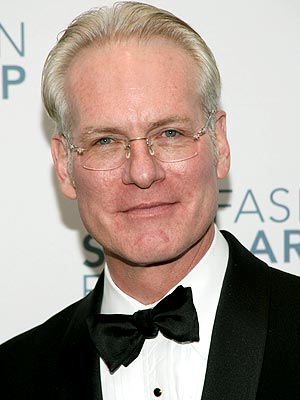
PETA's Man & Woman of 2009 - Ellen Degeneres & Tim Gunn

Each year PETA chooses two individuals who take action towards the well being of animals. For 2009 the winners are...

Ellen Degeneres


Ever since she and her wife, Portia De Rossi, decided to ditch all animal products in 2008, Ellen has made sure that her wildly popular talk show includes features to raise people's awareness of animal issues. She made vegan pizza with Chef Wolfgang Puck, spoke with Dr. Neal Barnard about the health benefits of a vegan diet, and just in time for Thanksgiving, "talked turkey" about the everyday abuse of animals on factory farms with Jonathan Safran Foer, author of Eating Animals. Ellen also created pages on her Web site that feature insight, info, and tips about cruelty-free living. Visitors can find recipes, read about why Ellen went vegan, learn where to shop, and more.

...and the winning male is Tim Gunn.


The connoisseur of class, the guru of good taste, the titan of tact (I could go on all afternoon with these) narrated our video exposing skin-crawling atrocities suffered by animals who are slaughtered for their pelts, and the media have been buzzing ever since. Tim recently told the L.A. Times, "Wearing fur is like wearing a big sign reading, 'I'm in favor of inflicting cruelty and pain on animals as a fashion statement.' Unspeakable torture is inflicted on dogs, cats, bunnies, raccoons, foxes, minks, and myriad trapped, helpless creatures in the name of fashion—yes, dogs and cats."

And thanks to Tim, fur challenges are noticeably absent from Project Runway—and there's zero fur at Liz Claiborne, where he is chief creative officer.

Click here to listen to the HDC chat with PETA's Ashley Fruno about Ellen & Timm.

To find out the latest from PETA, please visit www.peta.org

Tuesday, January 26, 2010

The Campaign against an Uranium Mine in the Northern Territory

In Alice Springs a local Aboriginal band has hooked up with popular N.T. band Super Raelene Bros. to record a song in local Arrente and Luritja languages about the impact of proposed Uranium mine at Angela Pamela and the possible impact on the locals' health.

Basil Schild of Super Raelene Bros. talks about the impact on the local people and the campaign against the mine.

Click here to listen to the interview.

For more information, please visit http://www.alec.org.au

Monday, January 25, 2010

A Pet is not just for Christmas

The average life expectancy for a dog is around 13 years and 15 years for a cat...some will live longer than 20 years. So when buying a pet as a gift whether for a child or an adult it's vital to consider who will care for the pet in the future...once the novety has warn off.

Ashley Fruno of PETA discusses the implications of owning a pet. It's not just for Christams. It can be up to 20 years....Many romantic relationships don't last that long!

Click here to listen to the interview.

Check out PETA's website at http://www.peta.org/

Tuesday, December 15, 2009

Tasmania Devils at Healesville Sanctuary


Devil facial tumour disease (DFTD) is an aggressive non-viral transmissable parasitic cancer that affects Tasmanian Devils. The first "official case" was described in 1996, in Australia. In the subsequent decade the disease ravaged Tasmania's wild devils, with estimates of decline ranging from 20% to as much as a 50% of the devil population, across over 65% of the state. Affected high-density populations suffer up to 100% mortality in 12–18 months. The disease has mainly been concentrated in Tasmania's eastern half. Visible signs of DFTD begin with lesions and lumps around the mouth. These develop into cancerous tumours that may spread from the face to the entire body. The tumours interfere with feeding, and the affected animal may starve to death.

At Healesville Sanctuary they have a successful breeding programme. The main purpose of the program is to establish an insurance population that can be realised if wild Tasmanian Devil become extinct due to the spread of DFTD

The Hump Day Crew chatted to Tammika McIvor about the Tasmanian Devils and the Healesville Breeding Program success. Click here to listen.

For more information on all the happenings at the three Victorian Zoos, please visit http://www.zoo.org.au/

Tuesday, December 8, 2009

The HDC keep you updated on Copenhagen

Delegates from around the world as well as scientists, NGO representatives and interested spectators have descended upon Copenhagen as the world attempts to plan how to tackle climate change. The Hump Day Crew keep you updated with our weekly interviews.

Click here to listen to David Hood of Greenpeace discuss the conclusions of the Copenhagen summit.

Click here to listen to what's happening in the first few days of the talks with Jonathan Larkin from the WWF.

Click here to listen to Luke Chamberlain discuss the other aspect of the Copenhagen talks getting less media attention then emissions reductions ie. saving world forests.

Click here to listen to Jonathan Larkin discuss the lead up to the Copenhagen talks.

For further information, please visit http://www.wwf.org/, www.greenpeace.org and http://www.wilderness.org.au/

Wednesday, November 18, 2009

Melbourne Zoo's New Wild Seas Exhibit

On the 9th December Melbourne Zoo will open their new Wild Seas exhibit to the public. The seals and penguins are currently moving in and will be followed at a late time, by pelicans, rays, Port Jackson Sharks and a variety of fish species.

The Hump Day Crew were intrigued to find out about the exhibit.

Click here to listen to the interview with Melbourne Zoo's curator for the exhibit, Jan Steele.

For the latest news from Zoos Victoria, please visit http://www.zoo.org.au/

The Environmental Impact Of The Oil Spill of the WA Coast

Recently the news coverage has looked at the financial and human impact on the oil spill of the coast of WA. How about talking with our Conservation Director, Dr Gilly Llewellyn, Conservation Director of the WWF was one of very few people to personally go out there and see what was going on. The Hump Day Crew chat to her about the issue.

Click here to listen to the interview.

For the latest news from the WWF, please visit http://www.wwf.org.au/

Wednesday, November 4, 2009

The True Food Guide 2010

Australia currently has limited labelling laws for genetically engineered (GE) foods. That's where the Truefood Guide comes in handy. The Guide rates food brands and products as Green (GE-free) and Red (may contain GE ingredients).

You can browse or search for brands on the right-hand side. The Guide is also available for download or you can order a convenient wallet-sized hard copy. It's simple to use:

Buy Green. Companies and supermarkets listed as green have implemented policies and procedures throughout their supply chain to actively avoid ingredients derived from GE crops.

Avoid Red. The companies and supermarkets listed in the red section of the guide may have products that contain ingredients derived form GE crops.

Click here to listen to Laura Kelly from Greenpeace discuss the excitement of the new release.

You can download the guide from http://www.truefood.org.au/

Also take time to quickly sign the on-line petition at http://www.truefood.org.au/OurRightToKnow/

Stay posted with all Greenpeace initiatives at http://www.greenpeace.org.au/

Tuesday, November 3, 2009

PETA's Top 5 on Living Cruelty Free

People for the Ethical Treatment of Animals (PETA), with more than 2.0 million members and supporters, is the largest animal rights organization in the world.

PETA focuses its attention on the four areas in which the largest numbers of animals suffer the most intensely for the longest periods of time: on factory farms, in laboratories, in the clothing trade, and in the entertainment industry.

Ashley Fruno of PETA Asia Pacific talks to the Hump Day Crew on five ways to live in a way that is cruelty free to animals. Her top five are:

1. Going vegan.
2. Buying only cruelty free products.
3. Not supporting zoos and other forms of entertainment using animals.
4. Not wearing wool, fur or leather.
5. Adopting an animal from a shelter and spaying or neutering companion animals.

Click here to listen the Ashley Fruno talking with the Hump Day Crew.
For the latest information, please visit http://www.petaasiapacific.com/

Saving Frogs with Michelle Howard - Zoos Victoria

Frogs play a vital roll in any environments ecosystem. They are also extremely vulnerable to environmental change since they require a stable environment in both the water and the land. Zoos Victoria has several initiatives aiming to conserve the welfare of frogs in our state.

At both Werribee and Healesville they are holding frog spotting nights where you have the chance to grab a torch and learn to identify frogs from their calls. You can also do your bit at home by recording any frog sounds you hear and sending them to the zoo. By collecting these recordings, Zoos Victoria can identify exactly which species of frogs are inhabiting where.

Click here to listen to Michelle Howard discuss these campaigns as well as saving the Southern Corroboree Frog (pictured) which is facing extinction as a result of disease caused by infection with a pathogen known as the Amphibian Chytrid Fungus as well as habitat destruction.

Find out more at http://www.zoo.org.au/

Tuesday, October 6, 2009

350.org prepares for an International Day of Action on 24th Oct, '09

Accelerating arctic warming and other early climate impacts have led scientists to conclude that we are already above the safe zone at our current 390ppm, and that unless we are able to rapidly return to 350 ppm this century, we risk reaching tipping points and irreversible impacts such as the melting of the Greenland ice sheet and major methane releases from increased permafrost melt.

There are three numbers you need to really understand global warming, 275, 390, and 350.

For all of human history until about 200 years ago, our atmosphere contained 275 parts per million of carbon dioxide. Parts per million is simply a way of measuring the concentration of different gases, and means the ratio of the number of carbon dioxide molecules per million other molecules in the atmosphere. 275 ppm CO2 is a useful amount—without some CO2 and other greenhouse gases that trap heat in our atmosphere, our planet would be too cold for humans to inhabit.

The 24th October, 2009 has been chosen as an international day of action for Climate Change in which 141 countries will participate in various activities to increase the attention deserved by Climate Change.

Luke Chamberlain, Forests Campaigner for The Wilderness Society speaks about 350.org and gives an update on logging in Victoria's Brown Mountain area. Click here to listen.

For more information, please visit http://www.350.org/ and http://www.wilderness.org.au/

Tuesday, September 29, 2009

BANNED: Pamela Anderson's New PETA Anti-Fur Advert

Animal Rights Organisation PETA is no stranger to controversial campaigns, but now they've managed to have one their racy videos banned at an entirely new location: airports. PETA's video features Pamela Anderson playing the role of an airport security guard who forces passengers to remove any clothes that aren't animal friendly. According to the New York Post, the video was scheduled to be played in several New York area airports, but after viewing it officials have decided the video is too provocative for children and are refusing to air it.

You be the judge:


For more information on PETA, please visit http://www.peta.org/

If you become a vegetarian you can drive a car

A common reason for individuals to choose vegetarianism is because of the poor standard at which animals are raised for meat. However the environmental impact of eating meat is also something worth considering. Producing just one pound of meat produces the same amount of greenhouse gases as driving a SUV 40 miles.

A 2006 United Nations report summarized the devastation caused by the meat industry by calling it "one of the top two or three most significant contributors to the most serious environmental problems, at every scale from local to global." The report recommended that animal agriculture "be a major policy focus when dealing with problems of land degradation, climate change and air pollution, water shortage and water pollution, and loss of biodiversity."

According to Environmental Defense, if every American skipped one meal of chicken per week and substituted vegetarian foods instead, the carbon dioxide savings would be the same as taking more than a half-million cars off U.S. roads.

People for the Ethical Treatment of Animals (PETA), with more than 2.0 million members and supporters, is the largest animal rights organization in the world.PETA focuses its attention on the four areas in which the largest numbers of animals suffer the most intensely for the longest periods of time: on factory farms, in laboratories, in the clothing trade, and in the entertainment industry.

They are a stand out organisation who make their statement by utilising pop culture.

Check out one of their adverts that was banned in the USA:


May celebrities such as Alicia Silverstone, Bryan Adams, Sophie Monk and Sir Paul McCartney have thrown their support behind PETA.

To hear all about it, click here and listen to the interview with one of PETA's Senior Campaigners, Ashley Fruno.

To find out more, please visit http://www.peta.org/ and http://www.goveg.com/

Tuesday, September 22, 2009

The Mountain Pygmy Possum - only 30 left in the wild

The Mountain Pygmy-possum is the largest of Australia's five species of pygmy-possum, yet it only weighs 45 grams and could easily fit in the palm of your hand. Its mouse-like body is covered in thick greyish fur, it has a long tail, agile front feet designed for gathering food, and strong back feet for gripping. It also has enlarged front teeth for cracking seeds. Unfortunately, there is as little as 30 left in the wild.

Click here to hear what Zoos Victoria is doing to save the Mountain Pygmy-possum from extinction.

For the latest news on Zoos Victoria, please visit http://www.zoo.org.au/

Monday, September 21, 2009

The Wilderness Society Update - Environment East Gippsland sues VicForests for illegal logging

Today, Environment East Gippsland commenced proceedings against VicForests in the Supreme Court of Victoria.

A writ was filed with the court this morning and has just been served on VicForests.

“We ask the Court for a permanent injunction to stop VicForests from logging Brown Mountain” said Jill Redwood, Coordinator of EEG. “We also ask the Court to declare that the logging of Brown Mountain is unlawful”.

Brown Mountain is known habitat for at least five species of wildlife listed as vulnerable or threatened under the Flora and Fauna Guarantee Act.

Click here to hear the latest from The Wilderness Society's Amelia Young.

To find out the latest news from The Wilderness Society, please visit http://www.wilderness.org.au/